A quick overview of your hormonal fertility
Would you like to better assess your ovarian reserve or learn more about your hormonal situation? With our at-home fertility test, you can have seven key hormone levels measured – conveniently via a finger-prick blood sample and without an appointment at the fertility center.
The test is suitable both if you are currently trying to conceive and for women who want to plan ahead or are considering Social Freezing and freezing their eggs. Your results are individually reviewed and medically interpreted by our experienced fertility specialists.

It’s that easy: Order your at-home fertility test now
How it works:
-

Step 1: Order online
Order your fertility test online. The test kit will be sent to your home in discreet packaging.
-
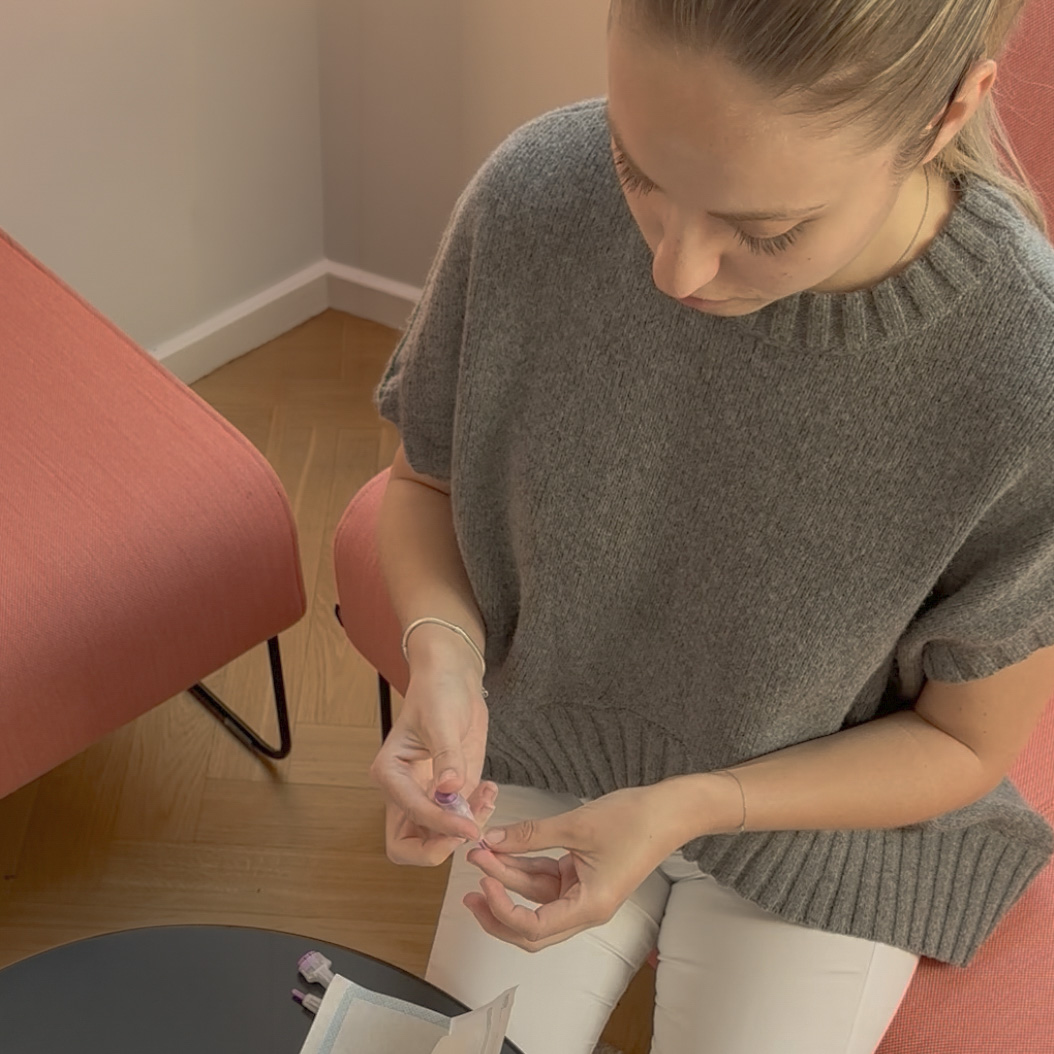
Step 2: Take a blood sample
Use the enclosed finger lancet to take a small blood sample and send it to our laboratory using the prepared return shipment.
-
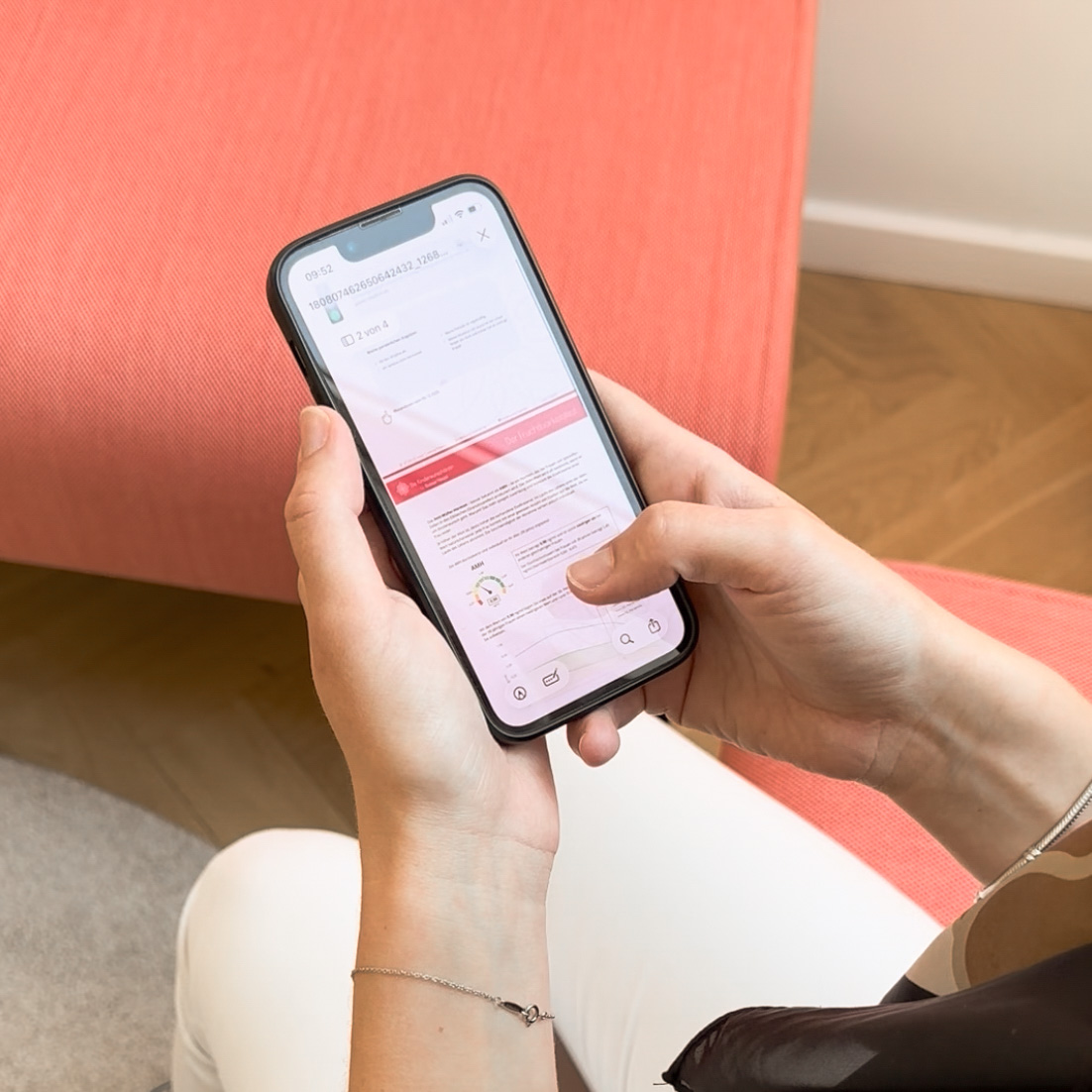
Step 3: Receive your results
Within approx. five business days, you will receive your personal report by email, reviewed by a specialist.
What the fertility test includes:
-
AMH + six other relevant hormone levels
-
Finger lancet for easy blood sampling at home
-
Prepaid return shipping
-
Laboratory analysis of your blood sample
-
Individual specialist review
-
Results usually within approx. 5 business days
€199
(incl. test kit, shipping, laboratory analysis and specialist review)
Discreet packaging. Your personal data and test results are handled confidentially and securely.
Why is the fertility test important?
Women are born with a limited number of eggs. This so-called ovarian reserve steadily declines over the course of life – how quickly varies from woman to woman.
A fertility test can help you assess your personal ovarian reserve and key hormonal factors at an early stage. This can be particularly valuable if you are postponing trying to conceive, planning a larger family, or considering Social Freezing and freezing your eggs.
Important to note: Ovarian reserve mainly indicates how many eggs you still have. When it comes to egg quality and the likelihood of pregnancy, age in particular plays a decisive role.
Your benefits at a glance
-
Simple and convenient
You can take the blood sample easily at home using a finger lancet – without an appointment or a visit to the practice.
-
Comprehensive hormone analysis
Seven key hormone levels provide insight into your ovarian reserve and hormonal situation and can indicate possible abnormalities.
-
Reviewed by a specialist
Your results are individually assessed and clearly explained by our experienced fertility specialists – you do not simply receive lab values.
-
Fast results
As a rule, you will receive your personal report by email, reviewed by a specialist, within about five business days.
More clarity for your family planning
If you know your ovarian reserve and hormonal situation, you can plan your family more effectively and with better information. The results can help you assess whether further examinations are advisable – or whether you would like to address your wish to have a child or options such as Social Freezing now.
The test therefore provides initial medical guidance for your next steps – regardless of whether you want to become pregnant now or are planning to try later.

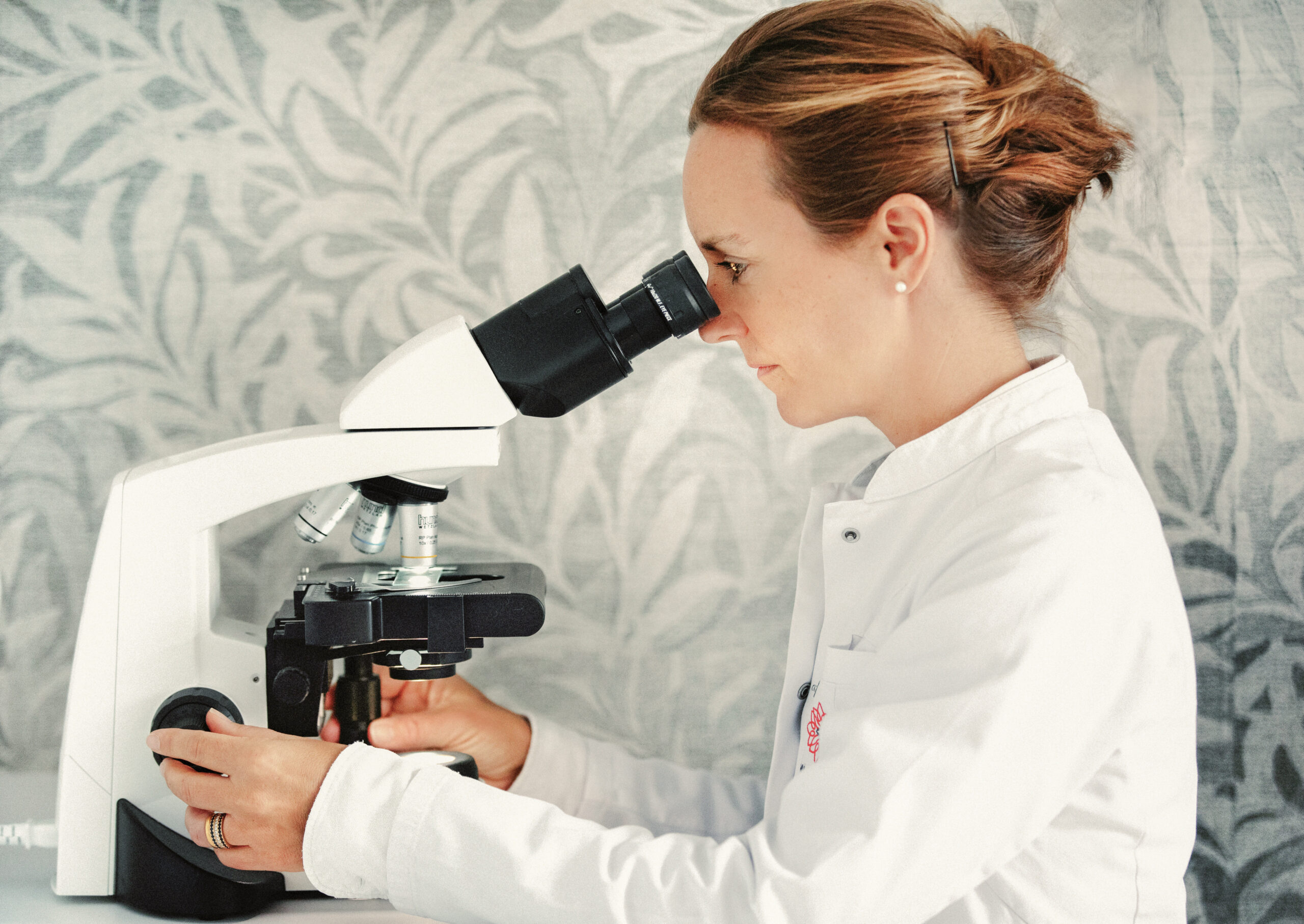
Which hormones are tested?
Our fertility test analyzes seven hormone levels that can provide important information about your ovarian reserve, ovarian function and hormonal situation:
-
AMH
Anti-Müllerian hormone is an important marker for assessing ovarian reserve. It provides an indication of how large your remaining egg supply is in relation to your age.
-
FSH
Follicle-stimulating hormone plays a central role in the maturation and development of eggs. An elevated FSH level may indicate reduced ovarian reserve or impaired ovarian function.
-
LH
Luteinizing hormone is involved in regulating the cycle and triggers ovulation. Abnormal values may indicate hormonal cycle irregularities.
-
Estradiol (E2)
Estradiol is produced primarily by the maturing follicles in the ovary. Together with FSH and other hormone levels, it provides important information about ovarian function and the hormonal situation at the beginning of the cycle.
-
Prolactin
An elevated prolactin level can impair ovulation and cause cycle irregularities. During breastfeeding, prolactin stimulates milk production and often suppresses ovulation.
-
Testosterone
Women also produce testosterone. Elevated levels can occur, for example, with polycystic ovary syndrome (PCOS, also referred to as PMOS) and may be associated with cycle and ovulation disorders.
-
TSH
TSH is an important value for assessing thyroid function. Thyroid dysfunction can affect the cycle and ovulation and is therefore also relevant when trying to conceive.
Important to know: The hormone levels tested allow an individual hormonal assessment, but they do not constitute a complete fertility work-up and do not allow a reliable prediction of the likelihood of pregnancy.
Order now
What happens after the test?
After the laboratory analysis, you will receive your results with an individual specialist interpretation. If all values are unremarkable and you have no further questions, you do not need to do anything else – the test simply serves as guidance for your personal family planning.
If relevant abnormalities are found, we will not leave you on your own. If the findings are clearly abnormal, we will contact you personally and discuss what the result means and whether further examinations are advisable.
If you would like to discuss your results in more detail, you can book a consultation appointment with one of our fertility specialists at any time. Together, we can interpret your values in the context of your age, your cycle and your personal life situation.
Not every abnormal value requires treatment. Sometimes follow-up monitoring is sufficient, sometimes additional examinations are advisable – and sometimes no further action is needed at all.

What Our Patients Say


Frequently asked questions about the at-home fertility test
How does this at-home fertility test differ from tests from drugstores and pharmacies?
Ovulation tests from drugstores or pharmacies help determine the timing of ovulation.
There are now various at-home fertility and hormone tests available in drugstores, pharmacies and online. Depending on the test, one or several hormone levels are measured. Ovulation tests, in turn, are primarily used to narrow down the timing of ovulation.
Our fertility test measures seven key hormone levels, including AMH to assess ovarian reserve, as well as FSH, LH, estradiol, prolactin, testosterone and TSH.
For us, the key difference is not only the number of values tested: your results are individually evaluated and medically interpreted by experienced fertility specialists. We do not look at hormone levels in isolation, but also take your age, your cycle and your personal information into account. If the findings are clearly abnormal, we will not leave you on your own, but will contact you personally and discuss whether further examinations are advisable.
When is the best time to take the fertility test?
The blood sample should be taken between cycle day 1 and 5, as FSH, LH and estradiol in particular depend on the timing within the cycle.
The first cycle day is the first day of a proper red menstrual bleed. Light spotting beforehand does not count. If your bleeding starts before 6 PM, that day counts as cycle day 1; if it starts later, count the following day as cycle day 1.
Can a fertility test show whether I can get pregnant?
No. There is no single blood value and no fertility test that can reliably predict whether or when a woman will become pregnant.
However, the test provides important information about your ovarian reserve and hormonal situation and can indicate hormonal abnormalities. In addition, age and egg quality in particular, as well as other factors such as ovulation, fallopian tubes and sperm quality, play a role in the likelihood of pregnancy.
What does the AMH level say about my fertility?
Anti-Müllerian hormone (AMH) is an important marker for assessing ovarian reserve. It provides an indication of how large your remaining egg supply, or ovarian reserve, is.
However, AMH does not directly indicate egg quality and cannot predict whether you will become pregnant naturally. Age in particular plays a decisive role in egg quality.
What does a low AMH level mean?
A low AMH level may indicate reduced ovarian reserve. However, this does not automatically mean that you cannot become pregnant naturally.
How an AMH level should be assessed depends, among other things, on your age and your personal situation. If the result is abnormal, an additional examination may be advisable, for example an ultrasound and determination of the antral follicle count (AFC).
Is the fertility test useful if I am considering Social Freezing?
Yes. If you are postponing trying to conceive and are considering Social Freezing or freezing your eggs, determining your ovarian reserve can be a sensible first step.
However, ovarian reserve is not the only decisive factor when it comes to deciding on Social Freezing. Your age at the time of freezing is also particularly important, as it is closely linked to egg quality and later chances of success.
Is the fertility test also useful if I am currently trying to conceive?
Yes. The test can provide an initial overview of your ovarian reserve and key hormonal factors.
However, if you have been trying to become pregnant for a longer period of time, the test does not replace a complete fertility work-up. In that case, further examinations such as ultrasound, cycle diagnostics, assessment of the fallopian tubes and a semen analysis may be advisable.
What happens if my results are abnormal?
An abnormal value does not automatically mean that your fertility is reduced or that treatment will be necessary. Lab values must always be considered in the context of your age, your cycle and your personal situation.
If your results are clearly abnormal, we will contact you personally and discuss what the findings mean and whether further examinations are advisable. If you also have questions about your results, you can book a consultation appointment with one of our fertility specialists at any time.
Can the test indicate PCOS or other hormonal disorders?
Yes. Certain patterns in the hormone levels tested can indicate hormonal abnormalities, for example polycystic ovary syndrome (PCOS), thyroid dysfunction or an elevated prolactin level.
However, the blood test alone does not provide a diagnosis. If there are corresponding abnormalities, further examinations may be necessary.
How reliable is the at-home fertility test?
If the sample is taken and sent correctly, the blood sample allows reliable measurement of the hormone levels tested. The enclosed instructions explain step by step how to take and send the sample using the finger lancet.
It is important to distinguish between reliable laboratory measurement and what it says about fertility: the hormone levels can be measured reliably, but they cannot on their own predict whether or when you will become pregnant.
How much does the at-home fertility test cost and how can I pay?
The fertility test costs €199 and is a self-pay service. The price includes the test kit, shipping, laboratory analysis and specialist review.
Payment is made directly online. Whether private health insurance covers the costs in full or in part depends on your individual plan and, where applicable, the medical indication.