What Is Social Freezing for Men (Sperm Cryopreservation)?
You may not want children today, but can well imagine starting a family at a later time. Before a planned vasectomy or a medical treatment that could impair fertility, the desire may also arise to preserve sperm as a precaution. As you age, the question of how your own sperm quality is developing and whether early precautionary measures make sense can also become more important.
In social freezing for men, sperm are frozen as a precaution and stored for possible later use. In so-called sperm cryopreservation, a semen sample is examined, prepared, and deep-frozen at approximately −196 °C. This allows sperm to be stored long-term and used when needed as part of a later fertility treatment. If freezing is done without an acute medical reason, it is referred to as social freezing.
The goal is to preserve the possibility of later family planning. Whether and when freezing sperm may make sense for you personally depends on your individual situation and should be discussed with a physician.
Later Use of Frozen Sperm
- Insemination (IUI): Here, the sperm are placed into the partner’s uterus at the appropriate time.
- IVF: In this procedure, an egg is artificially fertilized.
- ICSI: In ICSI, we specifically inject one sperm into an egg.
Which treatment is most suitable in an individual case depends on various factors—particularly the quality and number of frozen sperm, but also the age and medical conditions of the partner. If later insemination is to be an option, it may make sense to freeze a larger number of semen samples today, as a corresponding sample is required for each treatment attempt. With IVF or ICSI treatment, however—depending on sperm quality—fewer frozen samples may be sufficient. We therefore take into account which options you wish to keep open for later when planning cryopreservation.
When Does Freezing Sperm Make Sense?
 For Future Family Planning
Family planning does not always fit the current moment in life. Perhaps you want to focus first on education or career, the right partner for starting a family is not yet there, or you simply want to take your time with the topic of children and family. If you can generally imagine becoming a father later, you can freeze sperm today and thus preserve sperm from your current life phase for the future. In so-called social freezing for men, sperm are frozen as a precaution and stored for possible later fertility treatment. This does not commit you to anything today. Rather, you preserve an additional option for the future—for the time when a family fits into your life.
With Increasing Age
Male fertility also changes with age—though more slowly and later than in women. There is no fixed age limit for men. However, as you age, the number, motility, and quality of sperm can change. DNA changes in sperm also occur more frequently. Studies also show associations between higher paternal age and an increased risk of miscarriage as well as certain genetic and neurodevelopmental disorders in the child. A realistic perspective is important to us here: the absolute risks remain low overall, and men of advanced age can of course have healthy children. If you consciously wish to postpone your desire for children to a later time, it may therefore make sense to consider freezing sperm early. With a semen analysis, we can assess your current sperm quality and discuss together whether cryopreservation makes sense for you personally.
Before Medical or Drug Treatment
Before medical procedures such as surgeries, chemotherapy, or radiation therapy, as well as before a planned vasectomy, fertility can be permanently impaired. Cryopreservation offers the opportunity to preserve sperm cells as a precaution and keep the option of later fatherhood open.
Freeze Sperm Before Vasectomy
Anyone who decides on a vasectomy generally considers their family planning complete. However, life situations and personal wishes can change. If you wish to preserve an additional option for this eventuality, you can freeze sperm before the vasectomy and have them stored long-term. The frozen sperm are available to you for fertility treatment if you later wish to have children. We will discuss individually with you how many semen samples make sense for this purpose.
Freeze Sperm Before Gender-Affirming Treatment
Before gender-affirming hormone therapy or certain surgical procedures, it may make sense to think about your own family planning. In particular, longer-term hormone therapy can significantly reduce or halt sperm production. If you wish to keep open the possibility of having a child later with your own sperm, you can freeze them before starting treatment and have them stored long-term. We are happy to advise you personally on the appropriate timing and the process of cryopreservation.

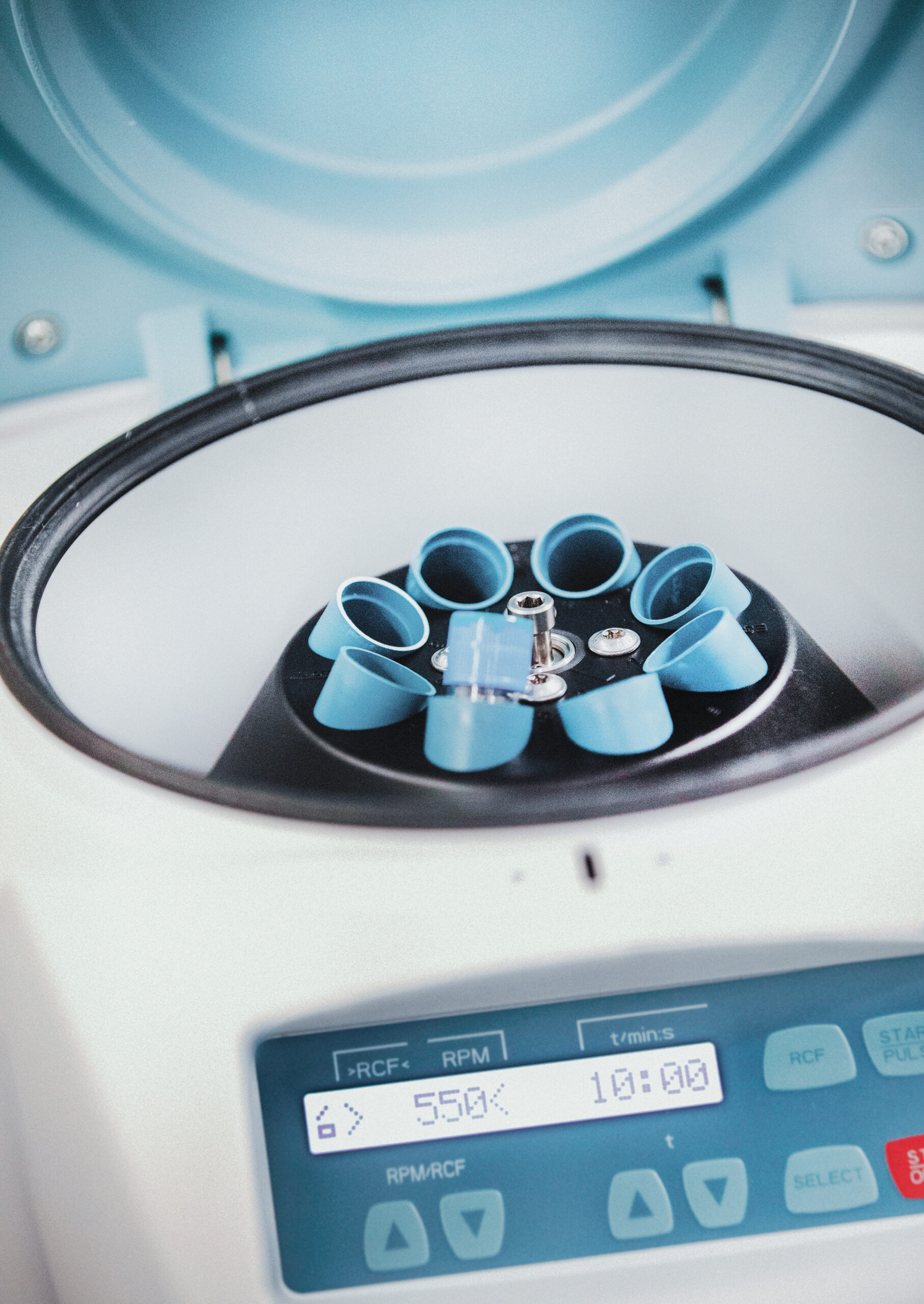
Freezing Sperm: Assessment by Our Experts
Gold standard
The goal of cryopreservation is to preserve sperm in the best possible quality for a later time. Modern cryopreservation methods have been established for many years and are an integral part of modern fertility treatments. They are designed to freeze sperm as gently as possible and store them long-term. Freezing sperm is particularly advisable before medical procedures that can impair fertility or when family planning is intended for later.
For later fertility treatment, it is not critical that every single sperm survives the process unchanged. After thawing, the sample is prepared in the laboratory, and sperm that are as motile and suitable as possible are selected for treatment. We therefore assess the sperm before freezing with a semen analysis to estimate the initial quality and individually recommend how many samples should be stored for meaningful precautionary measures.
Supplementary treatments & additional options
The semen analysis is the basic examination for assessing male fertility. Among other things, sperm count, motility, and morphology are analyzed. The results provide information on whether and in what form freezing sperm makes sense.
The DNA fragmentation test evaluates the genetic integrity of sperm. Increased fragmentation can affect fertilization capacity. The test provides additional information, especially in cases of reduced sperm quality or unfulfilled desire for children.
A hormonal examination can be useful to assess the hormonal prerequisites for fertility. It helps to better classify possible causes of reduced sperm quality and coordinate further procedures.
If no sperm or only severely limited sperm are found in the ejaculate, tissue can be removed from the testis during a small biopsy (TESE). This tissue can either be frozen for later use or the sperm can be used directly as part of assisted reproduction.
Process: How Freezing Sperm Works
The process of freezing sperm is clearly structured and takes place in several coordinated steps. The goal is to safely obtain the sperm, assess them medically, and preserve them long-term.
-
Consultation Appointment and Semen Analysis
Make an appointmentAt the beginning, we discuss your personal situation, your medical history, and the reason why you wish to freeze sperm.
We explain the process of cryopreservation and discuss what possibilities it offers for your later family planning and where its limits lie. The consultation appointment can take place on-site, by telephone, or via video consultation. Afterwards, a semen analysis can be performed to assess the number, motility, and other important characteristics of the sperm. You are also welcome to have the semen analysis done before the consultation appointment. We can then discuss the findings together directly and assess how many semen samples may make sense in your personal situation.
-
Provide Semen Sample
You can provide the semen sample in a private, quiet room at our center. If you live no more than about 30 to 40 minutes from our practice, you can also collect the sample at home and then bring it to us.
We will of course explain in advance what you should pay attention to during collection and transport. Before freezing, we also require a blood test for certain infectious diseases, particularly HIV as well as hepatitis B and C. This test is legally required for cryopreservation of sperm and can be performed directly at our center. Depending on sperm quality and your personal planning, it may make sense to freeze several semen samples. We will discuss individually with you how many collections we recommend in your case.
-
Prepare and Freeze Sperm (Cryopreservation)
After collection, the semen sample is carefully examined directly in our laboratory and prepared for cryopreservation.
Among other things, we assess the number and motility of the sperm. We then prepare the sample in a special cryoprotective medium, freeze it in a controlled manner, and store it at approximately −196 °C in liquid nitrogen (cryopreservation).
-
Store Sperm Long-Term
After cryopreservation, your semen samples are clearly labeled, documented, and stored for you in our modern cryostorage facility.
There they remain available to you for later fertility treatment even after many years. Established safety and quality standards apply to storage. The samples are carefully assigned and the conditions in the cryostorage facility are continuously monitored. You decide yourself how long you wish to store your sperm. We will of course inform you in advance about storage, costs, and all organizational matters.

Freeze Sperm at Our Center in Munich
Freezing sperm is a very personal decision. It is therefore important to us that you feel well advised and that the entire process is simple, discreet, and uncomplicated for you.
Schedule Consultation Appointment-
Personal Consultation
We will review your individual situation and your semen analysis and discuss with you whether cryopreservation makes sense, how many samples we recommend, and what options you can keep open for later.
-
Everything under one roof
Consultation, semen analysis, laboratory, cryopreservation, and long-term storage all take place directly at our center in Munich. You have short distances and dedicated contacts, and your sample does not need to be transported between different facilities for the individual steps.
-
Discreet Sample Collection
For collecting the semen sample, a private, protected room is available to you at our center. If you live nearby and can bring the sample to us within the required time window, sample collection at home is also possible after prior arrangement.
-
Own laboratory
Your semen sample is examined, prepared, and cryopreserved directly in our own laboratory. Your sample thus remains entirely within our center from examination to long-term storage.
-
On-Site Cryostorage
The sperm are then stored at −196 °C in liquid nitrogen in our on-site cryostorage facility. If you wish to use your frozen sperm later for fertility treatment, this can be performed directly at our center if desired. The samples are available on-site and do not need to be sent to another center first.

What Our Patients Say

Costs for Freezing Sperm in Munich
The costs for freezing sperm consist of preparatory diagnostics, cryopreservation, and subsequent storage. Before freezing, we first examine the number, motility, and quality of your sperm with a semen analysis. This allows us to assess whether and how many semen samples should be frozen for meaningful precautionary measures.
In addition, an infection screening for HIV as well as hepatitis B and C is required before cryopreservation.
To the cost overviewThe semen analysis is used to examine semen quality and provides information on the number, motility, and morphology of sperm. An extended semen analysis including DNA fragmentation analysis is available for approximately €395.
A DNA fragmentation analysis is not required for every man. We will discuss individually with you whether further examination makes sense in your situation.
Make an appointmentThe infection screening includes the required tests for HIV as well as hepatitis B and C and serves as safe preparation for cryopreservation.
Make an appointmentThe first semen sample is prepared in our own laboratory, frozen, and then safely stored in our cryostorage facility at −196 °C.
Make an appointmentYour cryopreserved sperm are stored long-term at −196 °C in our on-site cryostorage facility. For later fertility treatment, the samples are available directly at our center.
Make an appointmentNo fixed or flat-rate prices: We bill on the basis of the official scale of fees for doctors (GOÄ). According to the GOÄ, we are not allowed to quote fixed or flat-rate prices for medical services. The prices mentioned are intended to provide orientation and are typical for the treatments mentioned.
Possible VAT Liability: Medical services may be subject to VAT (currently 19%). This applies if, after diagnostics, no medical indication or confirmed diagnosis is present and it is therefore not a medical treatment in the strict sense. This may particularly be the case for social freezing treatments, but also for treatment of single mothers and same-sex couples.
If you wish to freeze your sperm as a precaution for your later family planning—for example, before a vasectomy or because your desire for children is planned for a later stage of life—this is generally a self-pay service. You then bear the costs for diagnostics, cryopreservation, and long-term storage yourself.
With private health insurance, cost coverage may be possible, particularly in cases of medical indication. However, whether and to what extent costs are covered depends on your individual insurance contract and plan. We therefore recommend clarifying cost coverage with your private health insurance before beginning cryopreservation. We are happy to provide you with a corresponding cost estimate for this purpose.
For those with statutory health insurance, there is a right to cost coverage under certain conditions if a germ cell-damaging treatment is imminent due to an illness and freezing the sperm is medically necessary—for example, before chemotherapy, radiation, or other fertility-damaging treatments. This cost coverage is provided within the framework of statutory medical care. Since we are a private fertility center, we cannot bill this service through statutory health insurance.
It may also be worth looking at your employer’s benefits: some companies now contribute to the costs of fertility preservation and social freezing as part of their employee benefits. Whether freezing and storing sperm are included depends on the respective benefit program.

Frequently Asked Questions About Freezing Sperm
Can You Freeze Semen?
Yes. After appropriate preparation, sperm can be cryopreserved at approximately −196 °C in liquid nitrogen and stored long-term. This can make sense both for personal reasons and before certain medical treatments.
How Does Freezing Sperm Work Specifically?
First, we discuss your personal situation and examine semen quality with a semen analysis. After the required infection screening, you provide a semen sample. This is examined and prepared in our laboratory, mixed with a cryoprotective medium, and then cryopreserved at approximately −196 °C in liquid nitrogen. The sample can then be stored long-term in our cryostorage facility.
Up to What Age Can You Freeze Sperm?
A general medical age limit for precautionary freezing of sperm cannot be meaningfully established. What matters are your current sperm quality, your health situation, and your family planning. With a semen analysis, we can assess your personal starting situation.
How Long Can You Freeze Sperm?
Sperm can be stored at approximately −196 °C in liquid nitrogen for very long periods. At these temperatures, the biological processes of the cells practically come to a standstill. The sperm therefore do not age biologically further during cryostorage.
According to current scientific knowledge, there is no known biological maximum duration after which sperm could no longer be used solely due to storage time. For the quality of stored sperm, the initial quality of the semen sample and the timing of freezing are therefore decisive—not the duration of subsequent storage.
How Many Semen Samples Should I Freeze?
How many semen samples make sense cannot be determined across the board. Decisive factors include your current sperm quality, the reason for cryopreservation, and your personal family planning. The question of whether you wish to have one or more children later and for which fertility treatment the sperm may be used also plays a role.
After the first semen analysis, we can assess the initial situation and plan together with you how many samples make sense and how many collections are needed for this. For later insemination, for example, more sperm are usually needed than for ICSI. Depending on sperm quality, a smaller number may already be sufficient; in other situations, we recommend freezing a larger number of semen samples.
How Long Must I Abstain Before Semen Collection?
We generally recommend an abstinence period of a few days before semen collection. However, the optimal duration may depend on your sperm quality and the planned examination. We will inform you before the appointment what abstinence period makes sense in your personal situation.
Can I Collect the Semen Sample at Home?
Yes, if you live near our practice, this is possible after prior arrangement. The sample must be brought to us within the agreed time window and under suitable conditions.
What Does the Quality of Frozen Sperm Depend On?
The quality of the semen sample at the time of freezing is decisive. The number, motility, and vitality of the sperm play a particularly important role. The freezing and thawing process can also reduce the motility of some of the sperm. We therefore examine the initial sample before cryopreservation with a semen analysis and can thus assess how many samples may make sense for later use.
How Can Frozen Sperm Be Used Later?
After thawing, the sperm are generally used as part of fertility treatment. Depending on number and quality, insemination, IVF, or ICSI may be options. Which method makes sense later can only be assessed based on the conditions that exist at that time.
Does Freezing Affect Sperm Quality?
The goal of cryopreservation is to preserve sperm in the best possible quality for a later time. Modern cryopreservation methods have been established for many years and are designed to freeze sperm as gently as possible and store them long-term. However, the freezing and thawing process is not entirely without effect: motility and vitality in particular may be lower after thawing. Scientific studies also show that changes to the cell membrane and an increase in DNA fragmentation can occur in some of the sperm. How pronounced these changes are depends among other things on the quality of the initial sample and the freezing method used.
For later fertility treatment, however, it is not critical that every single sperm survives the process unchanged. After thawing, the sample is prepared in the laboratory and sperm that are as motile and suitable as possible are selected for treatment. Depending on the number and quality of available sperm, these can later be used for insemination, IVF, or ICSI. We therefore assess the sperm before freezing with a semen analysis. This allows us to estimate the initial quality and individually recommend how many samples should be stored for meaningful precautionary measures.
What Does It Cost to Freeze Sperm?
The total costs consist of diagnostics, cryopreservation, and long-term storage. You will find the current individual prices in our cost section above. If several samples make sense, we will provide you with an individual cost overview in advance.
Does Health Insurance Cover Cryopreservation?
For social freezing, freezing sperm is generally a self-pay service. In cases of medical indication, cost coverage may be possible. Since we are a private center, we cannot bill through statutory health insurance. Those with private insurance should clarify cost coverage with their insurer in advance.
Can I Freeze Sperm Before a Vasectomy?
If you wish to preserve an additional option for a later desire for children despite a planned vasectomy, cryopreservation before the procedure may make sense. After a semen analysis, we can assess how many samples are advisable for this purpose.
What Happens If No Sperm Are Found in the Semen Analysis?
If no sperm are detectable in the ejaculate, this does not necessarily mean that no sperm of your own can be obtained. Under certain conditions, sperm can be obtained directly from testicular tissue by means of TESE and subsequently cryopreserved.