What does “sperm quality” mean?
Sperm quality refers to various characteristics of sperm that play a role in male fertility and successful fertilization. An initial assessment is made with a spermiogram, which examines, among other things, the number, motility, and morphology of the sperm, as well as other properties of the ejaculate.
-
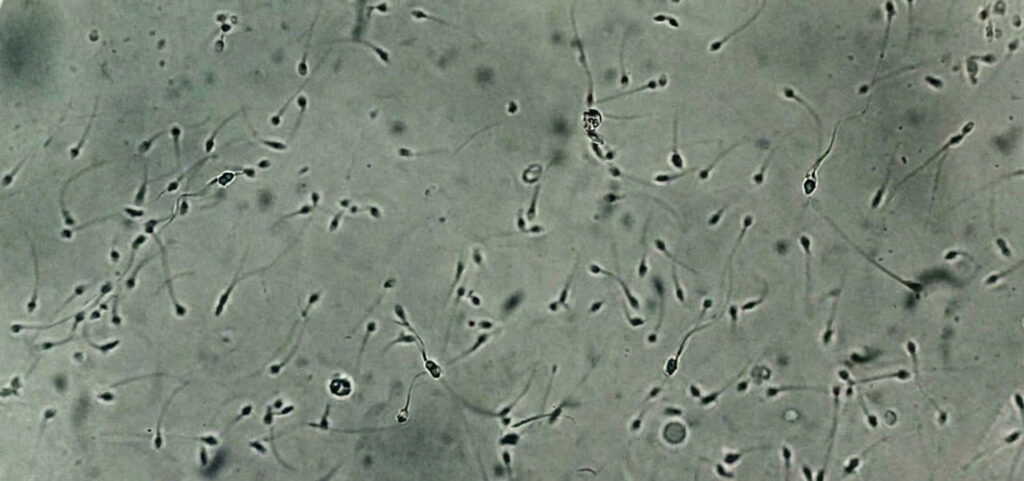
Concentration (Count)
This indicates how many sperm are present per milliliter in the ejaculate. A reduced count is referred to as oligozoospermia, while the complete absence of sperm is called azoospermia.
-
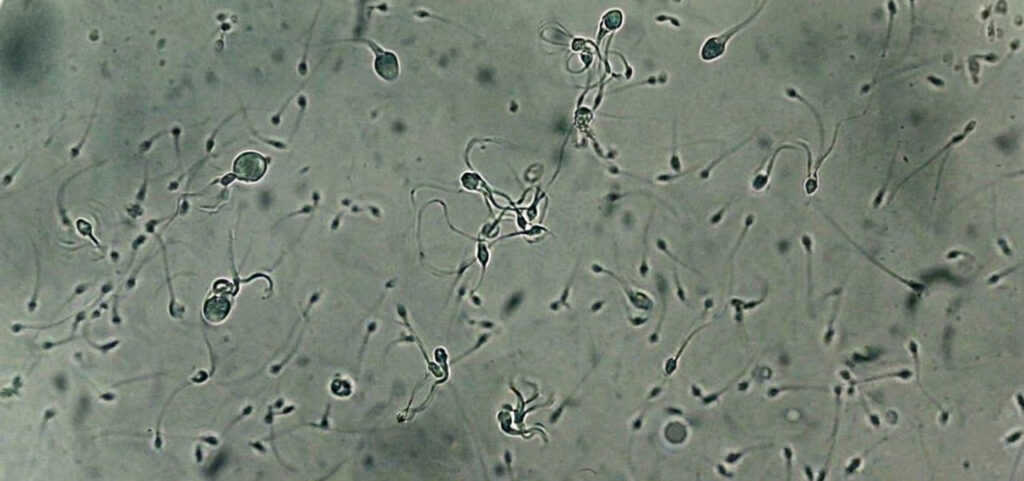
Motility (Movement)
Sperm must be able to move actively and purposefully to travel to the egg. If motility is restricted, it is called asthenozoospermia.
-
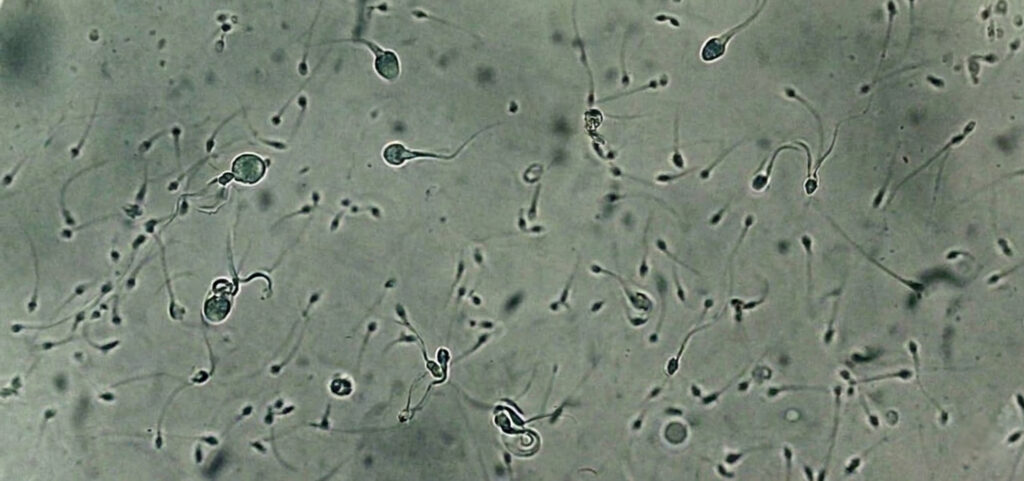
Morphology (Shape)
This assesses what proportion of the sperm has a normal shape. Significant abnormalities in sperm shape are referred to as teratozoospermia.
-
Other Ejaculate Parameters
In addition, ejaculate volume, pH value, and liquefaction are assessed. An increased number of inflammatory cells may indicate inflammation. Additionally, a MAR test can detect antibodies on sperm that may impair their function and ability to fertilize.
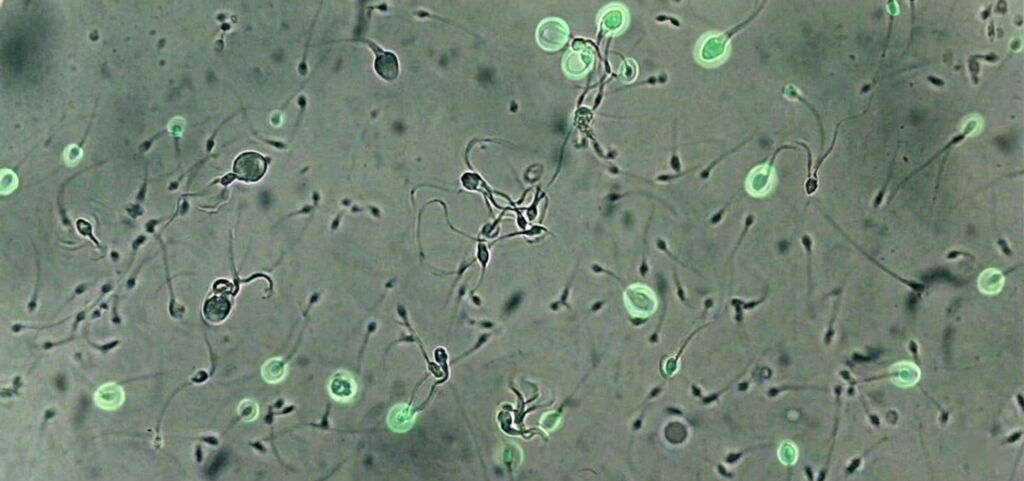
If several abnormalities occur simultaneously, it is called oligoasthenoteratozoospermia (OAT syndrome) – one of the most common causes of impaired male fertility. The spermiogram is the basic examination for assessing male fertility and allows for a standardized evaluation of sperm concentration, motility, and morphology.
Quality and Quantity of Sperm
For male fertility, the number of sperm is not the only decisive factor. Their motility, shape, and functional properties also play an important role. A spermiogram therefore provides essential information for assessing male fertility, but cannot capture all properties that may be relevant for successful fertilization and embryonic development. For specific questions, further examinations such as DNA fragmentation analysis, HBA test, or CatSper test can provide additional information.
Targeted Improvement of Fertility – What Really Helps
Since the formation and maturation of new sperm takes several weeks, changes usually only become apparent after about two to three months. Long-term changes in everyday life are therefore crucial.
However, not every limitation of male fertility can be improved through diet and lifestyle alone. In the case of abnormal values, a targeted medical evaluation makes sense.

1. Nutrition
A balanced diet that is as minimally processed as possible can support sperm formation and reduce oxidative stress.
Important nutrients for sperm quality are:
- Zinc – important for sperm formation and hormone metabolism
- Selenium – involved in sperm formation and protection against oxidative stress
- Vitamins C and E – important antioxidants
- Omega‑3 fatty acids – important for cell membranes and sperm function
- Folic acid – important for cell division and DNA synthesis
Ideally, these nutrients are consumed through a varied diet with plenty of vegetables, fruit, whole grain products, legumes, nuts, fish, and high-quality vegetable oils.
Dietary supplements can be useful in the event of a deficiency or in certain situations. However, a general high-dose intake is not fundamentally recommended and should be individually tailored.
In addition to a nutrient-rich diet, it is advisable to reduce the consumption of sugar, trans fats (for example from fast food and ready-made meals), and alcohol, as these can negatively affect fertility.
2. Weight and Exercise
Obesity can affect the hormone balance and thus also sperm production. In particular, abdominal fat promotes the conversion of testosterone into estrogen. Inflammatory processes, insulin resistance, and oxidative stress can also impair sperm quality.
Even moderate weight loss and regular exercise can have a positive effect on metabolism and hormone balance. Long-term changes are crucial instead of short-term diets.
3. Smoking and Alcohol
Nicotine and other components of tobacco smoke increase oxidative stress and can impair the count, motility, and shape of sperm. Increased DNA fragmentation is also observed more frequently in smokers. The rule is: the more you smoke, the stronger the effects can be.
When trying to conceive, it is therefore sensible to avoid cigarettes and other tobacco products as completely as possible. Even a reduction is a good first step.
Regular high alcohol consumption in particular can impair sperm production, semen quality, and hormone balance. In contrast, no clear deterioration in male fertility has yet been proven for occasional or moderate consumption.
Anyone who wants to support their sperm quality as best as possible should therefore keep alcohol to a minimum and, in particular, avoid regular higher consumption and binge drinking.
4. Testosterone and Anabolic Steroids
Testosterone preparations and anabolic steroids can significantly reduce or even completely suppress the body’s own sperm production. This also applies to testosterone taken, for example, for muscle building or as part of hormone therapy.
If there is a current or future desire to have children, testosterone therapy should therefore always be discussed with a doctor.
5. Stress and Sleep
Chronic stress can affect hormone balance. Persistently elevated stress hormones such as cortisol can impair testosterone production and thus also sperm formation. In addition, stress is associated with changes in sperm concentration, motility, and quality.
Getting enough sleep is also important: a large part of daily testosterone production takes place during sleep. Permanent lack of sleep or a severely disturbed sleep rhythm can therefore unfavorably influence testosterone levels and sperm quality. Regular exercise, sufficient sleep, and conscious recovery phases can help reduce stress and support a healthy hormone balance.
6. Heat and Environmental Factors
For optimal sperm formation, the testicles require a slightly lower temperature than the rest of the body. Frequent or prolonged overheating can temporarily impair sperm production and quality.
Therefore, avoid as much as possible:
- frequent very hot baths and prolonged intensive heat exposure
- having a laptop directly on your lap for a long time
- heavy or regular occupational heat exposure
Environmental chemicals can also play a role. Certain hormonally active substances – so-called endocrine disruptors – are associated with changes in sperm quality. These include, for example, phthalates and other plasticizers from plastics, as well as certain pesticides.
Exposure cannot be completely avoided in everyday life. However, it makes sense to heat food in plastic as little as possible, reduce unnecessary contact with plasticizers, and ensure suitable protective measures when handling chemicals professionally.
7. Ejaculation Frequency and Timing
The frequency of ejaculation also affects sperm quality. With longer periods of abstinence, the sperm concentration in the ejaculate often increases, but at the same time, motility and DNA quality can be less favorable. “Saving up” sperm for fertile days over a long period of time is therefore not sensible.
When trying to conceive, we recommend regular sexual intercourse – about every two to three days, and even more frequently during the fertile phase. Although very frequent ejaculations can reduce the sperm count per ejaculate, they do not fundamentally worsen fertility.
Before a spermiogram, however, defined abstinence periods apply so that the results can be reliably assessed and compared with one another.

-
Keeping Fertility in Mind Early On
Whether it’s a precautionary fertility check or an existing desire to have children: we examine male fertility individually and advise you on sensible next steps.
-
Comprehensive Sperm Diagnostics
From a classic spermiogram to further examinations, we assess not only count, motility, and shape, but also functional properties and the DNA quality of the sperm if required.
-
In-house Andrology Laboratory
The examinations take place directly in our own andrology laboratory – for short distances, coordinated processes, and reliable diagnostics.
-
Personal Medical Consultation
We consider your results in connection with your lifestyle, history, and desire to have children and discuss individually which further examinations or measures are sensible.
-
Modern Reproductive Medicine
If sperm quality cannot be sufficiently improved, modern reproductive medicine treatment options are available to provide targeted support for the desire to have children.
-
Digital & Uncomplicated
From booking appointments to transmitting findings, we design the processes to be digital, data-protection compliant, and uncomplicated.
-
Centrally Located in Munich
Our private center is located in the heart of Munich and can be easily integrated into everyday life with flexible appointment options.

Costs for Freezing Sperm in Munich
The costs depend on the individually required services. Before cryopreservation, a spermiogram is usually sensible to assess the semen quality.
To the cost overviewSample collection takes place in our Munich private center in a quiet, protected atmosphere. The subsequent analysis is carried out in our in-house andrology laboratory and is evaluated by a specialist. You will usually receive the findings encrypted by email within about five days.
Make an appointmentYou collect the semen sample discreetly at home and then bring it to our fertility center within a maximum of 40 minutes. We will provide you with a suitable container in advance and inform you about the procedure. The analysis is carried out in our in-house andrology laboratory and is evaluated by a specialist. You will usually receive the findings encrypted by email within about five days.
Make an appointmentThe cryopreservation includes the examination, preparation, and freezing of the sperm cells. In addition, costs for the required infection serology and subsequent storage may apply.
Make an appointmentFor the long-term storage of cryopreserved sperm, costs of approximately €380 per year are incurred at our FERTILA GmbH. In addition, a processing fee of €75 is charged for storage or removal.
No fixed or flat-rate prices: We bill on the basis of the official scale of fees for doctors (GOÄ). According to the GOÄ, we are not allowed to quote fixed or flat-rate prices for medical services. The prices mentioned are intended to provide orientation and are typical for the treatments mentioned.
Possible VAT liability: Medical services may be subject to VAT (currently 19%). This applies if, after diagnostics have been carried out, no medical indication or confirmed diagnosis is present and it is therefore not a medical treatment in the strict sense. This can be the case in particular with social freezing treatments, but also with the treatment of single moms and same-sex couples.
We would be happy to provide you with detailed cost information for the planned treatment in advance. This allows you to clarify cost coverage with your private health insurance (PKV) as best as possible beforehand. Statutory health insurance (GKV) does not cover costs at our center.

What Our Patients Say


Frequently Asked Questions About Sperm Quality
How long does it take for sperm quality to improve?
Since the new formation and maturation of sperm takes several weeks, changes usually only become apparent after about two to three months. Measures such as a healthier diet, weight reduction, less alcohol, or avoiding nicotine should therefore be maintained for several months. Depending on the cause, it can also take longer for changes to show in the spermiogram.
How can you test sperm quality?
The most important examination is initially a spermiogram. This assesses, among other things, the count, concentration, motility, and shape of the sperm. However, a normal spermiogram does not capture all properties that are important for fertilization. For specific questions, further examinations such as a DNA fragmentation test, HBA test, or CatSper test may therefore be useful.
Which dietary supplements can improve sperm quality?
Zinc, selenium, folic acid, omega‑3 fatty acids, and vitamins C and E are important for sperm formation, among other things. Dietary supplements can be useful, especially in the case of a proven deficiency or in certain situations. However, a general high-dose intake is not fundamentally recommended and should be individually tailored. We would be happy to advise you in detail on this.
What influence does stress have on sperm quality?
Chronic stress can affect the hormone balance and impair testosterone production via increased cortisol levels. This can also change sperm production and sperm quality. Other factors such as lack of sleep, little exercise, or an unbalanced diet are often added.
Can a poor spermiogram normalize again?
Yes. Sperm values can fluctuate and improve again, for example after infections, with changes in lifestyle, or after treatment of an underlying cause. An abnormal spermiogram should therefore usually be checked and medically classified. In the case of significantly limited values, further diagnostics may be useful.
When is it referred to as male infertility?
Male infertility is spoken of when no pregnancy occurs despite regular unprotected sexual intercourse over a period of about twelve months and the cause lies entirely or partially with the man. The diagnosis is not based on a single laboratory value, but on repeated examinations and a comprehensive medical classification. Even with limited sperm quality, pregnancy is still possible in many cases – if necessary with supportive measures.
Does sperm quality change with age?
Yes, sperm quality can also decrease in men with increasing age – although usually less significantly than in women. The motility and quality of the sperm can deteriorate, and at the same time, DNA damage can occur more frequently. As a result, it can take longer for a pregnancy to occur. However, there is no fixed point in time from which male fertility significantly decreases.
Can you get pregnant despite poor sperm quality?
Yes. Even with limited sperm values, a natural pregnancy can be possible. How high the chances are depends on which parameters are affected and how pronounced the limitation is. If pregnancy does not occur, insemination, IVF, or ICSI may be considered depending on the findings.