What does secondary infertility mean?
Secondary infertility, or secondary sterility, is when a child has already been born but, despite regular unprotected intercourse for at least twelve months, no new pregnancy occurs. Even if this seems surprising at first, secondary infertility is not uncommon. Between the first pregnancy and trying again, various factors may have changed—many of which can now be assessed well and often treated in a targeted way.
Typical questions and uncertainties
- Why is it suddenly not working with a second child?
- Has my fertility changed?
- Does my age play a bigger role now?
- What can cause secondary infertility?
- Which tests make sense now?
- What treatment options are available?
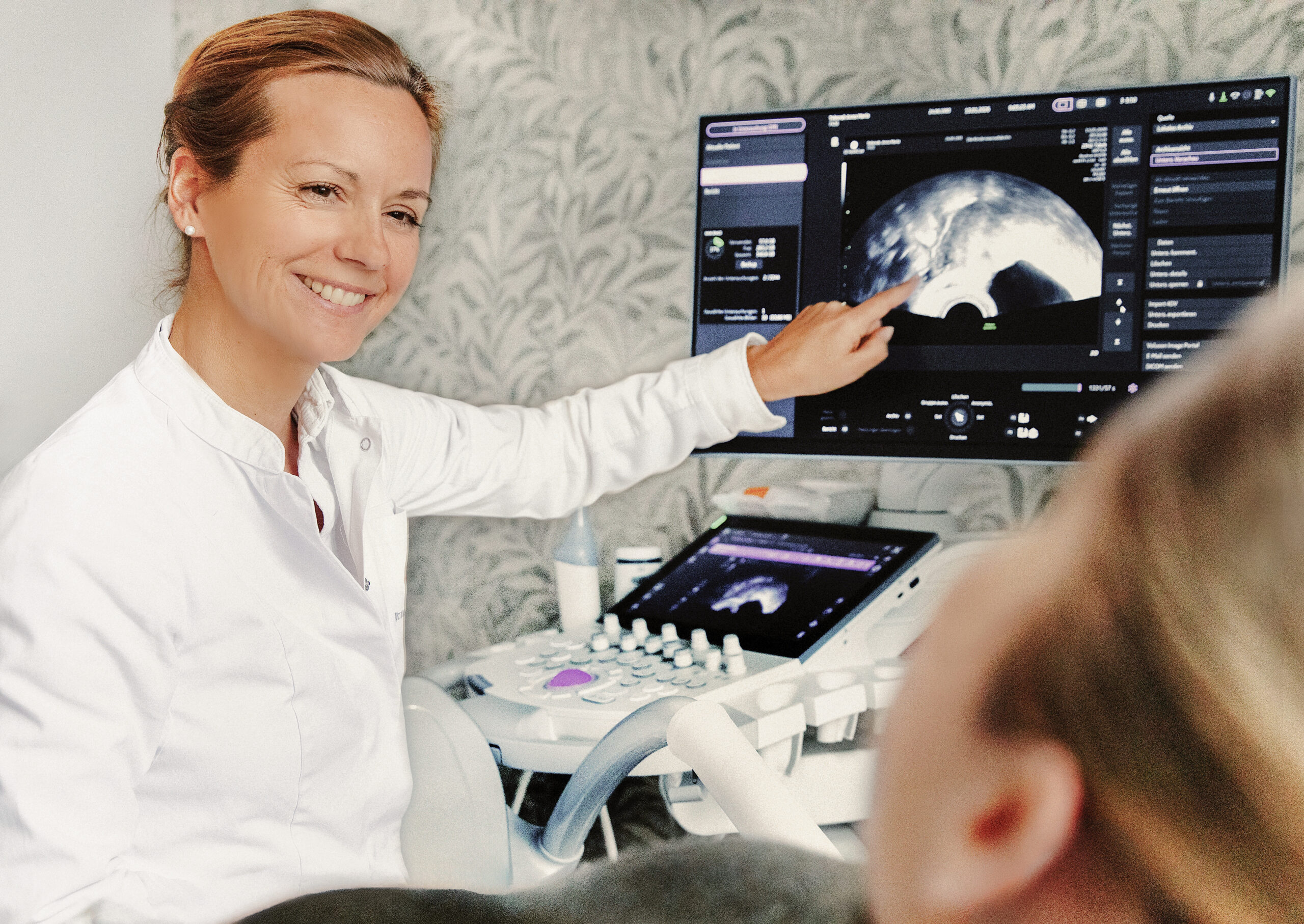
Diagnostics for secondary infertility
-
Initial consultation and medical history
In a personal consultation, we take the time to understand your individual situation. Together, we discuss the course of the first pregnancy, possible changes since then, as well as your current cycle, pre-existing conditions, and your fertility journey to date. We also include your partner’s fertility from the outset.
Book an appointment -
Diagnostics
Depending on your personal situation, we carry out targeted examinations. These often include a hormone analysis, an ultrasound of the uterus and ovaries, and a semen analysis for your partner. If needed, we expand the diagnostics, for example with a fallopian tube assessment (HyCoSy) or further specialised tests.
-
Individual Therapy Planning
Based on all findings, we work with you to develop an individually tailored treatment plan. We take into account the cause of your unfulfilled wish to have a child, your age, your personal wishes, and which treatment can be integrated well into your everyday life and family life.
Common reasons for secondary infertility
Even if the first pregnancy occurred without problems, the conditions for another pregnancy can change over time. Several factors often interact, and these can be identified well as part of targeted diagnostics.
As women get older, fertility naturally declines. From around age 30, the chances of pregnancy decrease slowly, and more noticeably from the mid-30s. Therefore, the time interval since the first pregnancy alone can already play a role.
Changes after the first pregnancy or birth can also have an impact. These include, for example, adhesions after a caesarean section or a curettage, infections in the postpartum period, or other changes to the uterus.
In addition, hormonal changes, thyroid disorders or cycle disorders may occur for the first time and make it harder to conceive. Your partner’s fertility can also change over time. Finally, stress, lack of sleep, or the challenges of everyday family life can mean that the fertile window is less often used optimally. The good news is that many of these causes can now be assessed well and often treated in a targeted way. Together, we will find out which factors play a role in your personal situation and which treatment makes sense.
Other possible causes at a glance
Even if a first pregnancy occurred without problems, the conditions for another pregnancy can change over time. Several factors often come together. The good news: Many of these causes can now be examined in a targeted way and often treated successfully.
Changes in egg quality and ovarian reserve
As women get older, both the number and the quality of the eggs change. This is why a pregnancy that occurred easily in the early 30s can become significantly more difficult a few years later. In particular, if the wish to have a child arises again in the late 30s or later, egg quality often plays a decisive role.
Hormonal disorders
Hormonal changes that occur after pregnancy and birth can also affect the cycle and lead to ovulation happening irregularly or not at all. Common causes include, for example, thyroid dysfunction, elevated prolactin levels, or changes in hormonal cycle regulation. This can make pregnancy more difficult.
Conditions affecting the uterus and fallopian tubes
Even after a first pregnancy, changes can develop in the uterus that make another pregnancy more difficult. These include, for example, adhesions after a caesarean section, curettage, or after bleeding disorders and inflammation in the postpartum period. But also newly developed fibroids, polyps, endometriosis, or a blocked fallopian tube. Depending on the extent, they can affect implantation or the path of the egg cell.
Reduced sperm quality
Your partner’s fertility can also change over time. A reduced number or motility of sperm can lower the likelihood of fertilisation. Causes can include hormonal changes, inflammation, increasing age, or lifestyle factors such as smoking, excess weight, or chronic stress.

Treatment options for secondary infertility
Treatment for secondary infertility is always based on the individual cause of your unfulfilled wish to have a child, as well as your age and personal situation. After careful diagnostics, we choose the form of therapy together with you that is medically appropriate and tailored to your personal circumstances.
Not every woman needs extensive fertility treatment. Often, targeted cycle optimisation or treating hormonal causes is sufficient. In other cases, insemination (IUI) or IVF/ICSI treatment can significantly improve the chances of success.
In cases of hormonal imbalance or absent or irregular ovulation, targeted medication support can promote egg maturation and better control the timing of ovulation. The dosage is individualised and closely monitored with ultrasound and hormone tests.
Insemination can be appropriate if sperm quality is slightly reduced, the cervix makes sperm transport more difficult, or a pregnancy with donor sperm is planned. The prepared sperm are placed directly into the uterus at the optimal time of ovulation, so that they have as short a path as possible to the egg cell.
If the likelihood of natural fertilisation is significantly reduced—for example due to blocked fallopian tubes, reduced egg quality, or more markedly reduced sperm quality—IVF or ICSI treatment may be the most promising therapy.
The eggs are retrieved after hormonal stimulation and brought together with the sperm in the laboratory, or in ICSI a single sperm cell is injected directly into the egg. The fertilised egg is then transferred into the uterus.
An unfulfilled wish to have a child affects not only the body, but often also emotional wellbeing. That is why, if you wish, we support you beyond the medical treatment. Complementary services such as nutritional counselling, psychological support, or selected naturopathic approaches can help accompany fertility treatment holistically and support you during this special phase of life.

Your care for secondary infertility
An unfulfilled wish to have a child after a pregnancy you have already experienced often raises many questions. We support you personally, empathetically, and with modern reproductive medicine expertise—from clarifying the causes to individually tailored treatment.
Make an appointment-
A realistic assessment of your chances
We explain the diagnostic results in an understandable way and advise you honestly about your individual chances of success. Together, we develop a treatment plan that fits your personal situation.
-
Reliable personal care
From the initial diagnostics through to treatment, you will be continuously cared for by the same doctor. This builds trust and enables short decision-making paths.
-
Precise diagnostics
State-of-the-art ultrasound diagnostics, our own hormone laboratory, and specialised examinations enable a well-founded assessment of your individual fertility and timely therapy planning.
-
Calm & privacy
At our private centre in Munich, we take time for your questions, your decisions, and personal conversations—in a calm and protected atmosphere.
-
Individual shared therapy decision
Not every patient needs IVF or ICSI. We recommend further treatments only when they are medically appropriate—and choose the path together with you that offers the best chances of success.

What Our Patients Say


Frequently asked questions about secondary infertility
What does secondary infertility mean?
Secondary infertility is when, after a pregnancy has occurred, no new pregnancy happens despite regular unprotected intercourse for at least twelve months. For women aged 35 and over, we recommend an assessment after six months. Fertility was therefore present before, but has changed over time.
How common is secondary infertility?
Secondary infertility is not uncommon. Many couples find that trying for another child takes significantly longer than expected. Estimates suggest it affects around one in ten couples trying to conceive. With increasing age, the likelihood of hormonal changes, new gynaecological conditions, or changes in sperm quality increases, which can make another pregnancy more difficult.
Why does becoming pregnant again sometimes become more difficult?
Between the first pregnancy and the desired second pregnancy, various factors may have changed—such as ovarian reserve, the cycle, or sperm quality. Complications during the first birth, changes in the fallopian tubes or uterus, and older age can also play a role.
Do I need to be examined even though I became pregnant easily once before?
Yes. Even after a previous pregnancy, the conditions for another pregnancy can change. Hormonal changes, reduced ovarian reserve, changes in the uterus or fallopian tubes, and changes in sperm quality can mean that becoming pregnant again takes longer. Targeted diagnostics help identify the cause and plan the appropriate treatment.
What causes secondary infertility in men?
Your partner’s fertility can also change over time. Possible causes include reduced sperm quality, hormonal disorders, inflammation, or lifestyle factors such as smoking or stress. A semen analysis provides important indications here and is therefore one of the first examinations in fertility diagnostics.
Can secondary infertility occur after a caesarean section?
In rare cases, adhesions or changes to the caesarean scar (niche defect) can develop after a caesarean section, which can make implantation more difficult. A targeted ultrasound examination helps identify possible changes in the uterus.
How long is someone considered secondarily infertile?
Medically, secondary infertility is defined as no pregnancy occurring after one year of regular unprotected intercourse. From the age of 35, an assessment is recommended after six months, as fertility naturally declines with increasing age.
What can be done about secondary infertility?
The first step is structured diagnostics to clarify the cause. Depending on the findings, hormonal support, insemination, or IVF/ICSI may be considered. Not every patient needs assisted reproduction—often, targeted treatment of the underlying cause is sufficient. Treatment is always based on the individual situation.
Does a miscarriage count as secondary infertility?
No. A miscarriage alone does not mean that secondary infertility is present. Many women become pregnant spontaneously again afterwards. However, if no new pregnancy occurs over a longer period despite trying to conceive, we recommend a medical assessment.
Is it still possible to become pregnant naturally despite secondary infertility?
Yes, even with secondary infertility, a natural pregnancy is often still possible. The decisive factors are the underlying causes, including age, the cycle, ovarian reserve, and possible changes since the first pregnancy. Targeted diagnostics can often clarify which factors play a role and which treatment may be appropriate.
Can my partner’s fertility change?
Yes, your partner’s fertility can also change over time. A reduced number or motility of sperm often goes unnoticed, but can affect the likelihood of pregnancy. That is why a semen analysis is often part of diagnostics for secondary infertility, even if you have already had children together.