Around five to ten percent of women experience increased hair growth on the face, arms, legs, and abdomen. A typical sign is also a female mustache. We would be happy to explain the potential causes and the treatments we offer at our private center in Munich to help you get rid of bothersome excess hair growth. Our goal is for you to feel comfortable in your skin again.
- What is hirsutism?
- What symptoms can occur alongside increased hair growth?
- How is hirsutism treated?
- What are the causes of hirsutism?
- Frequently Asked Questions
What is hirsutism?
Hirsutism refers to increased hair growth in women in androgen-dependent areas of the body, such as the face, chest, or abdomen. The cause can be an increased androgen effect or a hormonal imbalance.
What symptoms can occur alongside increased hair growth?
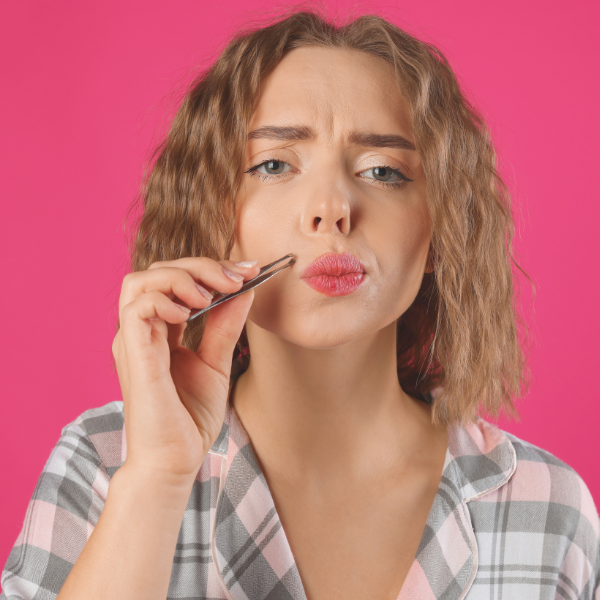
Increased hair growth can vary in intensity. Hair may appear on the chin, upper lip, neck, back, chest, or other areas. Sometimes it is only a slight increase in hair, while other times it is clearly visible body hair that often becomes a burden for those affected. The transition between normal body hair and hirsutism is fluid. Sometimes accompanying symptoms also occur, such as oily and blemished skin, menstrual cycle disorders, or increased loss of scalp hair.
How is hirsutism treated?
Since various hormonal causes can be responsible for increased hair growth, targeted diagnostics are crucial. In our in-house hormone laboratory, we can examine the relevant hormone levels. Which hormones are determined depends on your symptoms and your individual history. Depending on the specific question, further examinations or functional tests may be useful.
Why choose the fertility center in Munich?
- Specialized expertise: Our specialists in gynecological endocrinology specialize in hormonal issues such as hirsutism.
- Comprehensive diagnostics: We clarify potential hormonal causes in a targeted manner. Our in-house hormone laboratory enables rapid analysis of relevant hormone levels.
- Interdisciplinary collaboration: For accompanying conditions such as acne or metabolic changes, we work with other specialist disciplines as needed.
- Treatment according to current knowledge: Diagnostics and therapy are based on the latest scientific findings.
- Central location: You will find us in the heart of Munich, very close to Marienplatz.
What are the causes of hirsutism?
Sometimes it comes to light that the patient suffers from PCOS—often diagnosed late—also known as PCO syndrome or now renamed PMOS (polyendocrine metabolic ovarian syndrome). PCOS is one of the most common causes of hirsutism. Increased production or action of androgens can play a role. In addition to increased hair growth, cycle disorders, acne, or hair loss can occur, among other things. Depending on which symptoms predominate, we look for the appropriate treatment. For women who do not wish to have children, an anti-androgenic combined hormonal contraceptive may be a suitable treatment option, depending on the cause. You can find out more about this in the “PCO Syndrome” section. The treatment of this condition is a focus of our center.
Adrenogenital syndrome can also be associated with increased androgen production. To clarify this, we carry out targeted hormone tests. Depending on the findings, further examinations may be useful. Affected women may have cycle disorders and acne in addition to increased hair growth, depending on the severity.
Other possible causes include familial and ethnic factors that can influence the extent of body hair. Rarely, diseases of the ovaries or adrenal glands can lead to increased androgen production. In particular, hair growth that starts suddenly or increases rapidly should therefore be medically clarified. Furthermore, certain medications or the intake of hormonally active substances can trigger or intensify hirsutism. Therefore, we also take into account which medications and supplements you are taking during diagnostics.
Hirsutism is a complex condition with many possible causes and is not always easy to clarify. Therefore, we take a holistic view of you in order to do justice to your individual situation. Treatment depends on the cause, the severity of the symptoms, possible accompanying diseases, and whether there is a desire to have children. Depending on the situation, hormonal or other medicinal treatments may be considered. In addition, hair removal procedures such as laser or light therapies can be used.
Frequently Asked Questions about Hirsutism
What triggers hirsutism?
Hirsutism can be caused by an increased androgen effect or an increased sensitivity of the hair follicles to androgens. A common cause is PCOS/PMOS. More rarely, other hormonal diseases of the ovaries or adrenal glands can play a role. Certain medications or hormonally active substances can also trigger or intensify hirsutism.
How do you recognize hirsutism?
Typical is increased hair growth in areas such as the chin and upper lip (female mustache), sometimes also on the neck, chest, back, or abdomen. The severity can vary greatly; the transition between normal body hair and hirsutism is fluid. Accompanying symptoms such as cycle disorders, acne, oily skin, or increased loss of scalp hair can indicate a hormonal cause.
Which doctor diagnoses hirsutism?
Specialists in gynecology and endocrinology are particularly suitable points of contact for the clarification of hirsutism. In addition to increased hair growth, potential hormonal causes and accompanying symptoms are taken into account. Depending on the individual situation, hormone tests, ultrasound, or further examinations may be useful.
Which hormone is missing in hirsutism?
In most cases of hirsutism, there is no specific hormone missing. Often, an increased androgen effect or an increased sensitivity of the hair follicles to androgens plays a role. Which hormones are examined depends on the symptoms and the individual history.
Does the birth control pill help against hirsutism?
For women who do not currently wish to have children, combined hormonal contraceptives, for example, can be used to treat hirsutism. Which therapy is suitable depends on the cause, the symptoms, and individual risk factors.
Can hirsutism disappear again?
Whether hirsutism regresses depends on the cause and the treatment. If a hormonal cause is identified and treated in a targeted manner, or if triggering medications are adjusted, hair growth can be reduced. Changes often only become apparent after a few months, as hair is subject to different growth cycles.