What is PRP Treatment for Infertility?
PRP (Platelet Rich Plasma) is being investigated in reproductive medicine as a complementary treatment particularly for thin endometrium and reduced ovarian function. The scientific evidence varies depending on the area of application and is not yet sufficient to recommend PRP as an established standard treatment. Therefore, we use PRP exclusively after individual medical consultation and careful consideration.
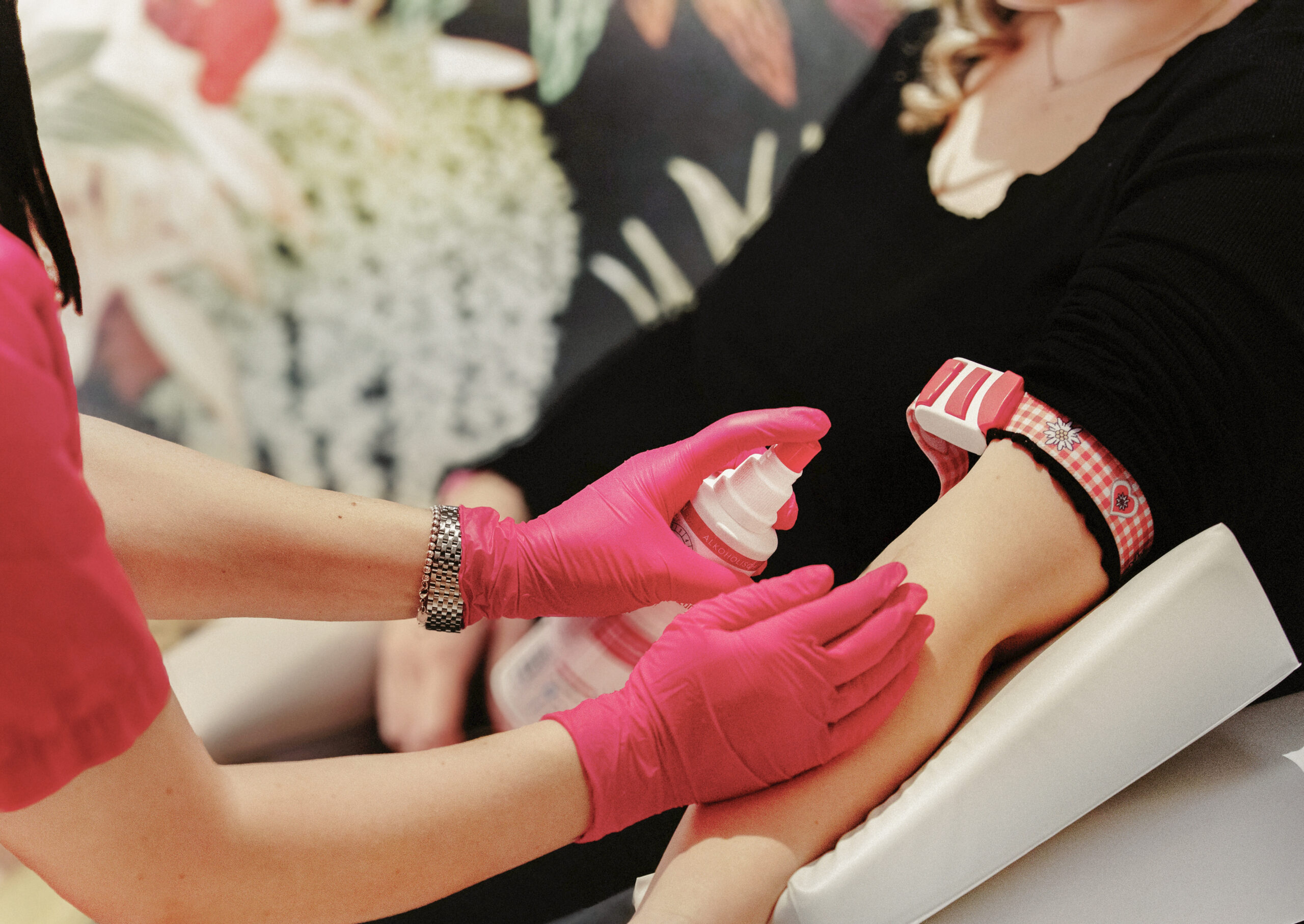
PRP is obtained from the patient’s own blood and is rich in platelets and endogenous growth factors. For treatment, a small amount of blood is drawn and processed using a specialized procedure.
In reproductive medicine, PRP is being investigated primarily for two different applications: intrauterine infusion to support the endometrium and injection into the ovaries in cases of reduced ovarian function. For both procedures, a potential therapeutic benefit is being investigated; however, they are not currently among the established standard treatments in reproductive medicine.
-
PRP to Support the Uterus (Endometrium)
In intrauterine PRP treatment, the processed platelet-rich plasma is introduced into the uterine cavity via a thin catheter. This procedure is being investigated particularly in cases of repeatedly thin or inadequately developed endometrium and recurrent implantation failure.
Several randomized studies and meta-analyses are now available showing promising results. Particularly in patients with thin endometrium, improved endometrial development has been observed with PRP. Some studies also show higher implantation, clinical pregnancy, and in some cases live birth rates.
However, existing studies differ in terms of patient selection, PRP preparation, dosage, and application. PRP therefore remains an unestablished standard therapy but can be considered as a complementary treatment option in selected patients after individual medical consultation. -
PRP to Support the Ovaries
In intraovarian PRP, the processed platelet-rich plasma is injected directly into the ovarian tissue under ultrasound guidance. This procedure is being investigated particularly in women with reduced ovarian reserve or poor response to hormonal stimulation (Poor Ovarian Response).
Individual studies report changes in AMH values, follicle development, or oocyte yield. However, whether PRP can actually influence ovarian reserve or increase the probability of live birth is not yet sufficiently established. Particularly for women with premature ovarian insufficiency (POI), restoration of ovarian function cannot currently be promised.
When PRP Treatment May Be Appropriate
PRP is not a routine fertility treatment. However, in selected patients it can be considered as a complementary therapeutic option. Whether treatment is appropriate depends on the individual baseline situation and whether PRP is to be used on the endometrium or ovaries.
PRP on the endometrium may be considered particularly in cases of:
- repeatedly thin or inadequately developed endometrium
- recurrent implantation failure after IVF or ICSI
- significant changes or damage to the endometrium, for example in Asherman syndrome
PRP on the ovaries may be discussed in selected cases of:
- reduced ovarian reserve, for example with low AMH value
- poor response to previous hormonal stimulation treatments (Poor Ovarian Response)
- premature ovarian insufficiency (POI)
The scientific evidence differs depending on the area of application: For intrauterine PRP, particularly in cases of thin endometrium, several studies with positive results are now available. For PRP on the ovaries, the clinical benefit is less well established. Therefore, we individually assess whether PRP treatment may be appropriate in your situation.
Risks and Limitations of PRP Treatment
- Temporary Discomfort
After treatment, mild pain, lower abdominal cramping, or minor bleeding may occur temporarily. With PRP treatment of the ovaries, discomfort may be similar to that following follicle aspiration. - Risks of Intrauterine PRP
The introduction of PRP into the uterus is performed via a thin catheter and is minimally invasive overall. Very rarely, heavier bleeding or infections may occur. - Risks of Intraovarian PRP
Treatment of the ovaries is performed by transvaginal puncture under ultrasound guidance. This carries risks similar to oocyte retrieval, including bleeding, infections, or injury to adjacent structures. When performed under sedation, the associated general risks apply. - No Guaranteed Effect
Not every patient benefits from PRP treatment. Whether and to what extent endometrium, ovarian response, or treatment outcome will change cannot be reliably predicted individually. - Still Limited Scientific Evidence
PRP is not yet among the established standard treatments in reproductive medicine. For intrauterine PRP, particularly in cases of thin endometrium, several studies with positive results are now available. For PRP on the ovaries, the evidence is significantly more limited. Further high-quality studies are needed to definitively assess benefit, optimal application, and long-term safety.


Our Medical Assessment of PRP Treatment
Advanced option
PRP has been used in various areas of medicine for many years. In reproductive medicine as well, intensive research is being conducted to determine whether the endogenous growth factors contained in platelet-rich plasma can be used therapeutically.
Application to the endometrium is currently particularly interesting. In recent years, several randomized studies and meta-analyses have been published showing positive results particularly for repeatedly thin endometrium—both regarding endometrial development and in some cases pregnancy and live birth rates. At the same time, the studies remain heterogeneous, so PRP cannot currently be considered an established standard therapy.
We assess PRP treatment of the ovaries more cautiously. While there are initial interesting studies on patients with reduced ovarian reserve or poor response to hormonal stimulation, whether this can relevantly improve ovarian function or particularly the chance of live birth is not yet sufficiently established.
For us, PRP is therefore a possible complementary treatment option for carefully selected patients. We discuss transparently what current studies show, where uncertainties remain, and whether treatment appears medically appropriate in the individual situation.
Integrating PRP Individually into Treatment
Depending on the treatment goal pursued, the timing of PRP application differs. We coordinate treatment individually with the cycle, findings, and further fertility treatment.
In cases of repeatedly thin or inadequately developed endometrium, PRP can be used specifically in the first half of the cycle. Depending on endometrial findings and cycle progression, we usually introduce the processed PRP two to three times at intervals of approximately two to three days between cycle days 5 and 12 via a thin catheter into the uterine cavity. Endometrial development is monitored by ultrasound and, if necessary, hormone measurements.
When PRP is to be used in connection with embryo transfer, intrauterine application typically occurs approximately one to two days before the planned transfer. The goal is to support the endometrium immediately before the implantation phase. Depending on the individual situation, application can be integrated into a natural or hormonally prepared transfer cycle.
In IVF or ICSI treatment, intraovarian PRP can be performed during an already planned follicle aspiration. The processed PRP is injected directly into the ovarian tissue under ultrasound guidance. If no oocyte retrieval is planned, PRP injection can be performed separately in the early follicular phase. Whether ovarian PRP treatment appears appropriate and at what time it is performed is determined individually based on ovarian reserve, previous stimulation courses, and further treatment planning.
Process of PRP Treatment for Infertility
In our fertility center, we guide you through all steps of PRP treatment in a structured and transparent manner. The exact procedure depends on whether PRP is used to support the ovaries, uterus, or as part of IVF/ICSI.
-
Medical Consultation & Treatment Planning
Make an appointmentA comprehensive medical consultation takes place at the beginning. We review your fertility history, previous treatments, and your personal goals.
Additionally, we perform ultrasound examinations and—depending on the question—hormonal diagnostics (e.g., AMH value). This allows us to assess whether PRP treatment is medically appropriate for your personal situation. We then discuss together whether and at what time PRP should be used.
-
PRP Collection and Preparation
On the treatment day, a small amount of blood is drawn. The blood is processed using a specialized centrifugation procedure to produce platelet-rich plasma (PRP) with a high concentration of endogenous growth factors. Processing is performed under controlled clean room conditions and the highest hygienic standards.
-
PRP on the Endometrium
The prepared PRP is introduced into the uterine cavity via a thin catheter.
The application is comparable to insemination or embryo transfer and does not require anesthesia. Depending on the treatment goal, PRP can be applied multiple times during endometrial development or specifically before a planned embryo transfer.
-
PRP on the Ovaries
The PRP is injected directly into the ovarian tissue using a fine needle under ultrasound guidance.
In IVF or ICSI treatment, this can be performed during an already planned follicle aspiration. If no oocyte retrieval is planned, treatment can be performed as a separate puncture. In this case, it is usually performed under brief sedation.
-
After Treatment
You can usually resume your daily activities immediately after the intrauterine PRP procedure.
After PRP treatment of the ovaries, you will initially remain in our center for a short observation period and should rest physically on the day of treatment.
-
Further Treatment Course
How to proceed from there depends on the treatment goal.
Possibilities include further PRP applications to the endometrium, hormonal stimulation, or a planned embryo transfer. We coordinate further treatment and necessary monitoring individually with you.

-
Specialized Reproductive Medicine Experience
PRP treatment is performed by specialists in Gynecological Endocrinology and Reproductive Medicine. We individually assess whether PRP can be appropriately used in your situation and which form of application is suitable.
-
PRP Specifically Integrated into Your Treatment
Whether for endometrial development, before embryo transfer, or as intraovarian application: We coordinate timing and implementation with your cycle and further fertility treatment. Direct integration into IVF or ICSI treatment is also possible.
-
Modern Laboratory Medicine
Blood processing is performed under controlled clean room conditions and according to high quality standards.
-
Evidence-Based and Transparent Consultation
The scientific evidence on PRP continues to evolve and differs depending on the area of application. We discuss transparently with you what current studies show, where limitations and uncertainties exist, and what you can realistically expect from treatment.
Current Research Status on PRP Treatment
The scientific evidence on PRP continues to evolve and differs significantly depending on the area of application.
-
PRP on the Endometrium
Several randomized studies and meta-analyses are now available for intrauterine PRP. Particularly for thin endometrium, studies show improved endometrial development; some meta-analyses also report higher clinical pregnancy and in some cases live birth rates.
For recurrent implantation failure as well, current meta-analyses of randomized studies show positive results regarding clinical pregnancy and live birth. However, studies continue to differ in terms of patient selection, PRP preparation, dosage, and timing of application.
Despite increasingly positive study results for intrauterine PRP, treatment is not yet recommended by international professional societies as an established routine treatment.
-
PRP on the Ovaries
For intraovarian PRP, the evidence is significantly less clear. Studies and meta-analyses report in some cases improvements in AMH, antral follicle count, or oocyte yield in women with reduced ovarian reserve or Poor Ovarian Response.
However, current analyses of controlled and randomized studies show no consistent evidence of improvement in pregnancy or live birth rates. Whether PRP can clinically relevantly improve ovarian function therefore remains a subject of research.
Current Literature:
- Yang Y, Zhang X, Zhang Y. Platelet-rich plasma therapy for thin endometrium: a comprehensive review. Archives of Gynecology and Obstetrics. 2025.
- Efficacy of platelet-rich plasma in the treatment of thin endometrium: a meta-analysis of randomized controlled trials. 2024.
- Liang X et al. Impact of Intrauterine Infusion of Autologous Platelet-Rich Plasma on Assisted Reproductive Outcomes in Patients With Recurrent Implantation Failure: A Meta-Analysis of Randomized Controlled Trials. Reproductive Medicine and Biology. 2026.
- Sadeghpour S et al. Evaluation of intraovarian injection of platelet-rich plasma for enhanced ovarian function and reproductive success in women with POI and POR: a systematic review and meta-analysis. European Journal of Medical Research. 2025.
- Intraovarian Platelet-Rich Plasma for Women with Diminished Ovarian Reserve: A Systematic Review and Meta-Analysis. 2026.

What Our Patients Say


Costs of PRP Treatment for Infertility
The cost of PRP treatment depends on the area in which it is used (ovaries or uterus) and whether it is performed independently or as part of existing fertility treatment (e.g., IVF/ICSI). It typically includes medical consultation and diagnostics, blood draw and laboratory processing of PRP, and the actual treatment.
To the cost overviewTreatment is performed on an outpatient basis and is particularly suitable for thin endometrium or recurrent implantation failure. Depending on the medical baseline situation, multiple applications may be appropriate.
Make an appointmentCosts vary depending on whether treatment is performed independently or as part of oocyte retrieval. Before beginning, you will receive a transparent individual cost overview according to GOÄ.
Make an appointmentNo fixed or flat-rate prices: We bill on the basis of the official scale of fees for doctors (GOÄ). According to the GOÄ, we are not allowed to quote fixed or flat-rate prices for medical services. The prices mentioned are intended to provide orientation and are typical for the treatments mentioned.
Possible VAT liability: Medical services may be subject to VAT (currently 19%). This applies if, after diagnostics have been carried out, no medical indication or confirmed diagnosis is present and it is therefore not a medical treatment in the strict sense. This can be the case in particular with social freezing treatments, but also with the treatment of single moms and same-sex couples.
We would be happy to provide you with detailed cost information for the planned treatment in advance. This allows you to clarify cost coverage with your private health insurance (PKV) as best as possible beforehand. Statutory health insurance (GKV) does not cover costs at our center.

Frequently Asked Questions about PRP Treatment for Infertility
What is PRP treatment?
PRP stands for “Platelet Rich Plasma.” For treatment, a small amount of the patient’s own blood is drawn and processed to produce particularly platelet-rich plasma with endogenous growth factors. In reproductive medicine, PRP is being investigated primarily for treatment of the endometrium and—with significantly more limited evidence—for application to the ovaries.
For Whom May PRP Treatment Be Appropriate?
Intrauterine PRP may be considered particularly in cases of repeatedly thin or inadequately developed endometrium and in selected cases of recurrent implantation failure. Intraovarian PRP is being investigated primarily in cases of reduced ovarian reserve or poor response to previous stimulation treatments. Whether PRP may be appropriate in your individual situation will be discussed after careful medical assessment.
How Do PRP on the Endometrium and PRP on the Ovaries Differ?
In intrauterine application, PRP is introduced into the uterine cavity via a thin catheter. The goal is particularly to support endometrial development or application in connection with embryo transfer.
In intraovarian treatment, PRP is injected directly into the ovarian tissue under ultrasound guidance. The two procedures differ not only in implementation but also in their scientific evidence: For PRP on the endometrium, several studies with positive results are now available, while the clinical benefit of PRP on the ovaries is significantly less well established.
How Successful Is PRP Treatment?
This cannot currently be answered with a universally applicable success rate. For intrauterine PRP, several studies and meta-analyses show particularly for thin endometrium improved endometrial development and in some cases higher pregnancy and live birth rates. There are also positive results for recurrent implantation failure.
For intraovarian PRP, individual studies report changes in AMH, antral follicle count, or oocyte yield. However, whether this improves the probability of pregnancy or live birth is not yet sufficiently established.
When Does PRP Treatment Show Its Effect?
With PRP treatment of the endometrium, a possible effect may be visible within a few days in the same cycle. Further endometrial development can be directly monitored by ultrasound.
With PRP treatment of the ovaries, a possible change is expected later. Since follicle maturation occurs over several weeks to months, possible effects can usually be assessed after approximately 6–12 weeks. Whether and to what extent PRP actually influences ovarian function is not yet scientifically conclusively established.
Can PRP Increase Ovarian Reserve?
Whether PRP can actually improve ovarian reserve is not yet established. Individual studies report changes in AMH or antral follicle count after intraovarian PRP. However, this does not mean that new oocytes are created or that age-related decline in ovarian reserve can be reversed.
What are the side effects or risks?
Since PRP is obtained from the patient’s own blood, allergic reactions to the plasma itself are not expected. After intrauterine PRP, mild bleeding, cramping, or lower abdominal discomfort may occur temporarily.
Intraovarian treatment is more invasive and carries the general risks of transvaginal puncture, particularly bleeding, infections, or rarely injury to adjacent structures. When treatment is performed under sedation, the associated general risks apply.
When should PRP treatment not be performed?
Whether PRP treatment can be performed must be individually assessed. Contraindications may include acute infections, relevant coagulation or platelet disorders, and certain serious illnesses. Medications that affect platelet function or coagulation should also be considered before treatment.
Does PRP replace IVF or other infertility treatments?
No. PRP is a complementary, not yet established treatment and does not replace IVF or ICSI. However, with appropriate indication, PRP can be integrated into fertility treatment or an embryo transfer cycle.
Does Health Insurance Cover the Cost of PRP?
PRP treatment is typically a self-pay service. Possible reimbursement by private health insurance depends on the individual plan and medical indication and should be clarified with the insurance company in advance.